Article body analysed
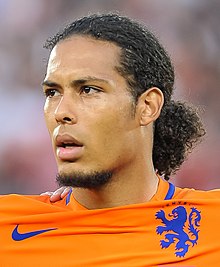
EPL Who are the leaders in Liverpool's much-changed squad this season? Steven Halliwell/MI News/Nur Photo via Getty Images Virgil van Dijk was unequivocal. “We showed that we are absolutely united and we go forward as one, ” the Liverpool captain told reporters on Saturday, after back-to-back wins against Inter and Brighton & Hove Albion in the space of five days helped lift the mood around the reigning Premier League champions. Advertisement The “outside noise” that Van Dijk so often talks about has increased fiercely this term, partly because of the huge drop in form that saw Liverpool lose nine games out of 12 in all competitions over two months from late September as new signings struggled to settle and the form of longer-serving players dipped, but also due to Mohamed Salah’s explosive post-match interview on December 6 that called his future at the club into question. Things are more settled on the back of a subsequent five-game unbeaten run that has included three clean sheets, with centre-back Van Dijk adding that recent “performances speak for themselves”. There is no doubt that a squad packed with international stars and mixed personalities has been severely tested, however, starting with the tragic death in July of the popular Diogo Jota, who had been at the club for five years and helped deliver the title last season. So what are the current dynamics of Liverpool’s dressing room, and how is it different from last season following a summer of change? Under previous manager Jurgen Klopp, Liverpool had a designated leadership group that consisted of Van Dijk, Jordan Henderson, James Milner, Trent Alexander-Arnold, Andy Robertson and Alisson. When Henderson and Milner left the club in 2023, Salah was added. But over the course of his Anfield reign, Arne Slot has moved away from having a formal leadership group. The Dutchman has instead largely looked to his captain and vice-captain to set the tone. Van Dijk remains the talisman and the squad’s public-facing figurehead, with his leadership skills highly valued by fellow Dutchman Slot. After being appointed captain in July 2023, he decided it was incumbent on him to speak to the media after every match, regardless of the result. He is the leader who sets the tone and ultimately runs the dressing room, but is not alone. Advertisement Robertson, one of the club’s longest-serving players, having joined in 2017, has a strong voice, too, and was awarded the vice-captaincy ahead of Salah when Alexander-Arnold left in the summer. At the time, Slot told reporters: “Apart from all the quality he’s shown on the pitch, he also plays a big role in the culture we have here at this club, which is the biggest gift I got from Jurgen. ” Goalkeeper Alisson, meanwhile, is seen as a mature presence whose words carry significant weight. It was no coincidence that the Brazil international was chosen as the player to face reporters alongside Slot in the pre-Inter press conference in Italy last week, an occasion that had the potential to be explosive in the wake of Salah’s comments 48 hours earlier. Alisson dealt with everything that was thrown at him with ease. Van Dijk, Robertson and Alisson set the standards and lead by example. Salah, 33, the second-oldest player in the squad behind the 34-year-old captain, is also vocal but has been more of a performance-based leader over the years. That’s a role Dominik Szoboszlai has taken up in recent times, too. Already the Hungary national-team skipper, he looks like a Liverpool captain in waiting, largely because of his on-field presence, versatility and availability. Szoboszlai has an aura that sets him apart and mixes well with different characters within the group: he is one of the few players who can be considered a close friend of Salah, for example. Although he’s not as eloquent or public-facing as Van Dijk, he is able to handle pressure and step up when required. Cody Gakpo is recognised as another mature figure, while Curtis Jones feels Liverpool’s defeats more than most as the only remaining Scouser in the team. Jones spends a lot of time in his home city and is occasionally seen out at local restaurants. He is close with Gakpo, Ibrahima Konate and Ryan Gravenberch, and backs himself as a key player in the team. Advertisement When asked by reporters after the Inter game how he’s finding the new diamond midfield formation, he laughed and replied playfully: “It works because I am playing! ” A fortnight earlier, after the embarrassing 4-1 defeat to PSV at Anfield in the previous Champions League fixture, Jones was not prepared to hold back with his analysis, admitting to Irish TV network RTE: “We’re in the s**t and it needs to change. ” Liverpool’s poor start to this season has frustrated the entire dressing room, and the group’s new arrivals have taken time to integrate. Van Dijk, who sits next to fellow Dutchman Gravenberch and new signing Jeremie Frimpong in the dressing room, is universally respected. He makes a point of trying to help signings settle and offers advice on where in the area to live, which schools are best for players’ children, and good places to eat. Robertson contributes, too, and both have helped Alexander Isak, Florian Wirtz and Hugo Ekitike — the club’s three most expensive buys this summer — adapt to life on Merseyside. That has not been a straightforward process, though, and Wirtz in particular has felt disappointed by his slow start and taken some of the criticism personally. The fact the Germany international playmaker is yet to score for Liverpool isn’t helping, especially as he arrived from Bayer Leverkusen in his homeland for an initial £100million ($115m), then insisted early in the season that such a hefty price tag would not weigh him down. He’s also still finding his place within a squad of many new faces. Isak’s stuttering start at Liverpool is even more alarming, given he moved from Newcastle United as a proven Premier League goalscorer. The Swede, whose dressing room space is next to that of Jones, is considered reserved by team-mates. “He’s very, very quiet, ” Argentine midfielder Alexis Mac Allister told reporters after the West Ham game, adding that he has also interacted with him in Spanish (Isak played in Spain for three years before joining Newcastle in 2022) to help facilitate conversation. Ekitike, in contrast, is a more gregarious personality, unafraid of speaking his mind. After he scored in the Community Shield against Crystal Palace, the Frenchman celebrated with a gesture that suggested he was ignoring any of the noise following his £79m transfer from German side Eintracht Frankfurt and the (by then) loud discussion over fellow striker Isak’s impending arrival. Those familiar with Liverpool’s squad, speaking anonymously to protect relationships, talk about a “main character energy” within the attacking ranks now as Salah, Wirtz (who are stationed next to each other in the changing room), Ekitike, and Gakpo all have reasons to require validation in an expensively assembled team. When Liverpool’s on-field crisis was at its peak, there was a feeling among some players that the team had become a group of individuals. Advertisement New left-back Milos Kerkez, signed from fellow Premier League side Bournemouth, was struggling for form but has improved, and Wirtz’s former Leverkusen team-mate Frimpong (a signing who found it easier than others to settle due to knowing the area, in the north-west of England, well from his days in Manchester City’s academy and already having relationships with some team-mates) then suffered two separate hamstring injuries in a matter of weeks. Giorgi Mamardashvili, meanwhile, replaced an injured Alisson for eight late-autumn games but has needed time, too, as he adapts to life as a backup after years as first-choice goalkeeper at Spain’s Valencia. Ten players who featured in the first team last season left either permanently or on loan over the summer, and departees such as Alexander-Arnold, Kostas Tsimikas, Harvey Elliott and Caoimhin Kelleher were all well-liked and firmly established in the group after multiple years at the club. A measure of those lasting friendships was evident when Salah delivered a spiky reply to an online Liverpool fan account suggesting that Wirtz and Isak were vast upgrades on Luis Diaz and Darwin Nunez, two more members of the 2024-25 title-winning squad who moved on in that same transfer window. How about we celebrate the great signings without disrespecting the PL champions? https: //t. co/l Rug6o FYCt — Mohamed Salah (@Mo Salah) September 3, 2025 That might have simply been a defence of much-admired team-mates and friends, or an early pointer that all was not well in Salah’s own mind with how things were developing at Anfield. However, it was striking that in his headline-making interview following the 3-3 draw with Leeds, when he said the club had “thrown him under a bus” and that his relationship with Slot had broken down, the Egypt international did not criticise any team-mates, instead insisting that “they know how much I love them”. The huge amount of squad turnover this summer has changed both the way Liverpool play and how the group connects with each other. Naturally, players gravitate towards those with similar characteristics to them, whether that be age or outside interests. More commonly, though, relationships are formed along cultural and language lines. Jota and Tsimikas, who formed a close friendship after arriving in the same transfer window in summer 2020, were important members of the dressing room in this regard as they were able to straddle multiple social groups. Jota could talk to the club’s Brazilian players in Portuguese, but as Scotsman Robertson said over the summer, he was also “the most British foreign player I’ve ever met”, due to their shared interests such as darts and horse racing. Tsimikas, nicknamed the ‘Greek Scouser’, was tight with Salah, but mixed easily with others and quickly learned how to handle the pressure of playing for Liverpool. What made Liverpool so special last season was how the entire team contributed at important moments and how each player knew exactly what was required. Advertisement For periods so far in this campaign, the on-field chemistry has not been as clear, with the defence nowhere near as miserly, the relationship between Kerkez and Gakpo still developing, and too much change on the right side, with Conor Bradley in and out of the team and Salah struggling for form and now away at the Africa Cup of Nations for around a month. Any hopes of developing a multi-functioning and fluid attacking line have been put on hold, with Wirtz and Isak not yet up to speed, and attacking full-back Frimpong missing games through injury. Ekitike is the exception, but even his success then poses questions on what role Isak may have to accept. This is a transitional period for Anfield’s home dressing room, with Salah’s future uncertain, Konate and Robertson, who turns 32 in March, both set to be out of contract at the end of the season, and the need for new leaders to stand up and be counted. In the short term, however, Liverpool must simply focus on ensuring this mini-revival over their recent matches is sustained. Only then, perhaps, will we know for sure how united this squad really is. Additional reporting: James Pearce Gregg Evans is a Staff Writer for The Athletic covering Liverpool. Previously he reported on Aston Villa and spent over a decade at the Birmingham Mail covering West Midlands football. His time with Villa included the drop into the Championship and then an incredible return to European football. He also covers golf. Follow Gregg on Twitter @greggevans40